Just to make sure where we stand:
there was no change in the way trading takes place for a long time.
Sale strategies represent the way you set pricing and what you would like to see taking place.
This has nothing to do with requests made on the market for the purchasing of products.
The gamemaster has no part in the way it happens. There is no money put it or taken out of the market except for interventions.
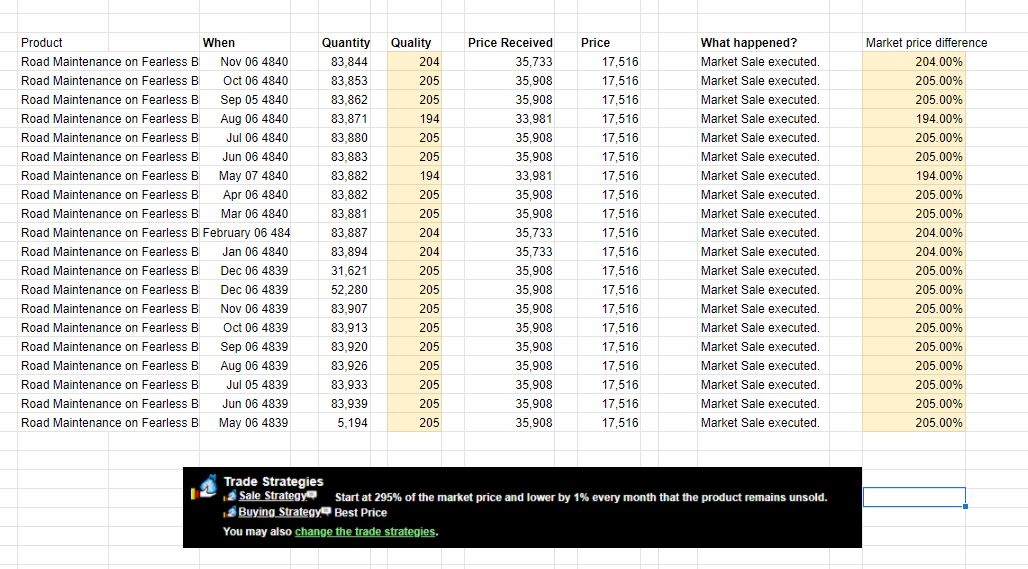
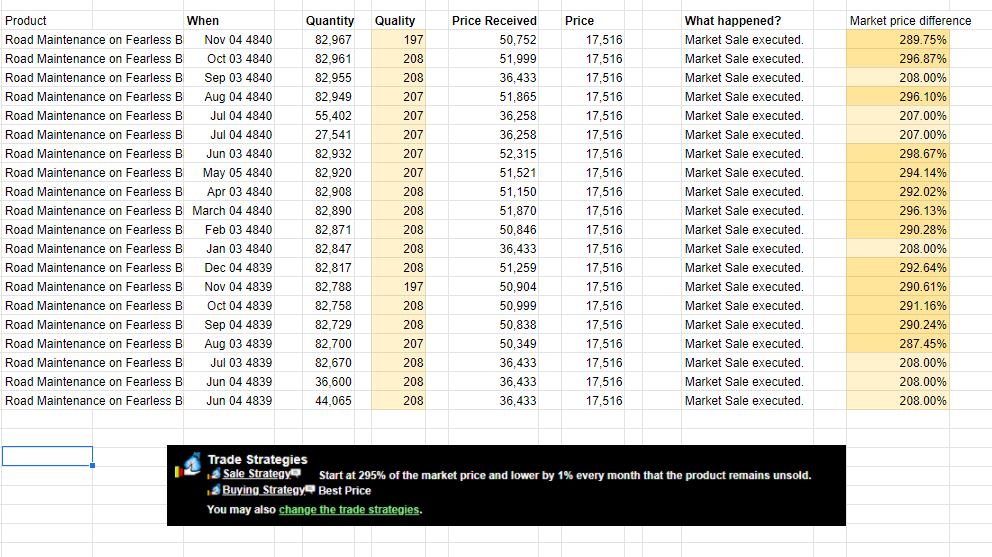
If there is no one around who is willing to purchase products that are offered for a high price, than the high price will not be paid.
If you see erratic pricing, it is the result of erratic offerings.
The only change I can see is a growth of the share of C3 countries in the market. They have higher population and they have on average, 2 corporations more than before. The amount of product they produce increased .
Interventions by game procedures are always at market price and they do not cause any shortage to become a surplus. They are not capable of doing this.
These interventions behave like product offerings by players.
In fact, even with some interventions, when the shortage is less than 50% - 70% of the amount of product on the market, these interventions stop.
Computing the expected price is not relevant. The market procedure is a market maker, it tries to find matches and in many cases, when the market is stuck, it forces trading and must find a common ground, despite requests for a higher price.
The difficulty in matching transactions is much more frequent when the price is very high. This is even more frequent in the last months.
All this is as old as the game, except for one round of tuning that took place a long time ago.
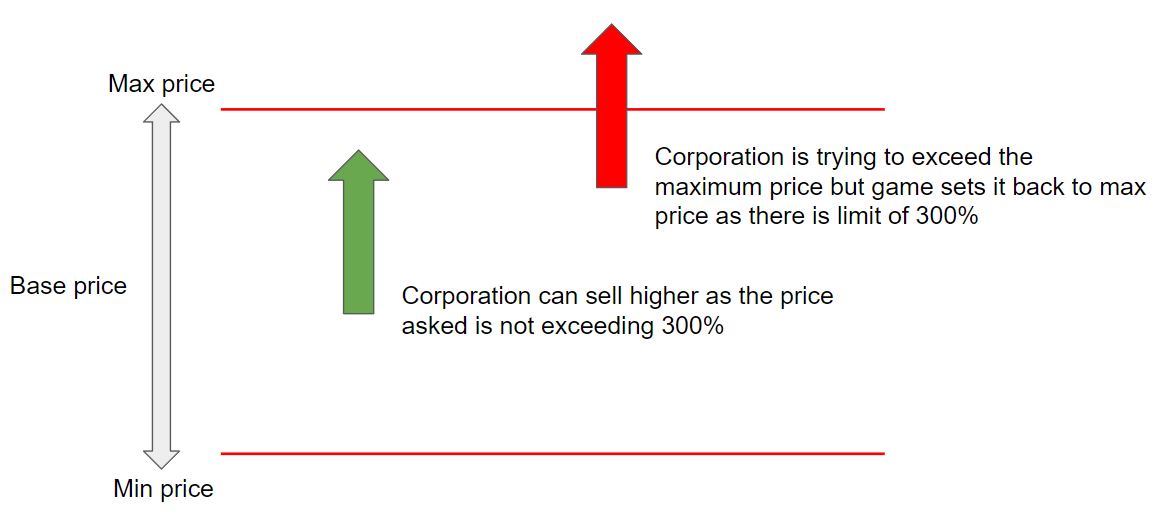
Also that change was related to trading at or close to the top possible pricing.